
The one number that matters
We see renters fixate on the upfront move-in cost every single day. That focus completely obscures the true price of the lease. Our team always redirects attention to the only metric that matters.
Total cash cost over the full lease term reveals the cheapest way to cover apartment deposit requirements. The national average US rent reached $1,750 in July 2026 according to market data from RentCafe. You must look past the initial amount due at signing when securing spaces at that price point.
A structure that costs $50 a month sounds smaller than one costing $1,000 once. The math completely changes right up until you multiply that monthly fee across a standard lease. When evaluating a doubled deposit vs deposit alternative apartment scenario, absolute clarity is essential.
Here is every option run against the same lease.
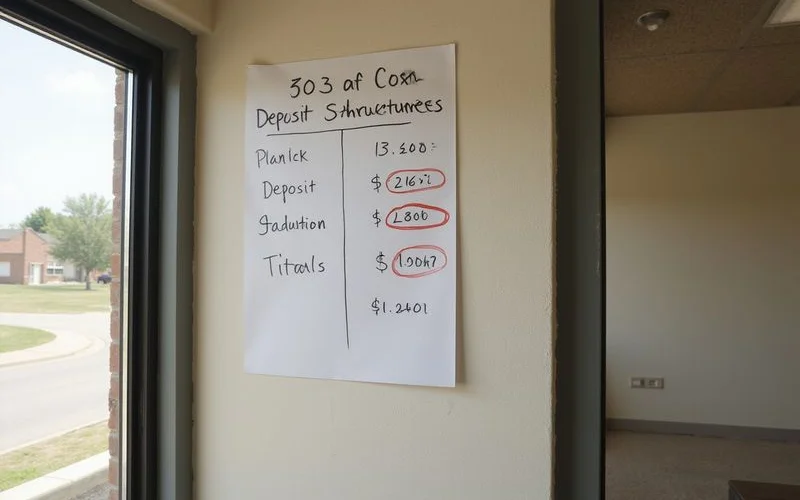
The comparison: Doubled deposit vs deposit alternative apartment
The exact true net cost is the only way to accurately compare deposit structures. We use a $1,438 monthly rent for this model, which reflects the Fort Worth average as of April 2026 from RentCafe. Your specific quoted standard deposit is set at $500 for a 12-month term.
| Structure | Cash at signing | Total over the lease | Money back at move-out | True net cost |
|---|---|---|---|---|
| Standard deposit | $500 | $500 | Up to $500 | ~$0 |
| Doubled deposit | $1,000 | $1,000 | Up to $1,000 | ~$0 |
| Last month up front | $1,938 | $1,938 | $0, but a month of rent is prepaid | ~$0 |
| Deposit alternative | Often first premium only | ~$2,500 | $0 | ~$2,500 |
| Guarantor service | Varies | ~$1,100 | $0 | ~$1,100 |
Read the last column carefully. That figure represents the honest answer.
Our analysis shows that a doubled deposit and last-month-up-front cost you almost nothing in the end. They tie up cash temporarily. These structures do not consume your money. Assuming you leave the unit in reasonable condition, a doubled deposit comes back to you. A prepaid month simply covers rent you would have paid anyway.
Deposit alternatives and guarantor services actively consume your money. Roughly $2,500 for the alternative and roughly $1,100 for the guarantor service are permanently gone. Companies like Rhino, Jetty, or Obligo charge non-refundable fees. That creates a genuinely large gap for a decision that gets made in ten minutes at a leasing desk.
On a 15-month lease
Deposit structures remain flat regardless of the lease term, while premium-based alternatives grow more expensive over time. We always remind clients that paying a monthly fee means paying more on a longer lease. Deposit structures simply do not scale with the term length.
| Structure | 12 months | 15 months |
|---|---|---|
| Doubled deposit | $1,000 | $1,000 |
| Last month up front | $1,938 | $1,938 |
| Deposit alternative | ~$2,500 | ~$3,125 |
| Guarantor service | ~$1,100 | ~$1,375 |
If you are taking a longer term to get a deeper lease-up concession, the premium products get proportionally more expensive. In highly competitive rental markets like Austin or Downtown Houston, property managers frequently push 15-month terms to control unit turnover. The traditional deposit options stay completely flat while alternative costs rise. This dynamic is absolutely worth factoring into your final budget.

So why does anyone choose the expensive one?
Renters choose expensive alternatives because cash at signing is a strict limitation. The totals above assume you have thousands of dollars readily available. We know that move-in day expenses stack up incredibly fast.
A standard move-in day at $1,438 rent with a doubled deposit includes many hidden fees. Your day one expenses typically look like this:
- First month’s rent: $1,438
- Doubled deposit: $1,000
- Application fees: ~$50 to $150 (Even with states like New Jersey legally capping fees at $50 in 2026)
- Admin fees: ~$150 to $200
- Extras: Pet fees, utility connections, and moving trucks
Those costs easily push the total north of $2,700 before you buy a single bag of groceries.
Swap the doubled deposit for an alternative product and your initial cost drops by roughly $950. If that $950 is the difference between moving and not moving, the alternative is doing its specific job. The total long-term cost becomes the accepted price of that immediate flexibility.
Our main objection is choosing an alternative by default just because the leasing office mentioned it first. You must make this choice intentionally.
Which ones will the property actually accept?
The property management policies completely dictate which deposit structures are allowed. This single constraint overrides all the financial math discussed above. We make a targeted phone call before anyone spends an application fee to verify exactly what management accepts.
Properties evaluate risk differently and apply rules based on your specific screening file:
- Some communities cap the standard deposit they will accept from a flagged file and require a surety bond alternative instead.
- Some management companies refuse to work with alternative products like Obligo or Rhino entirely.
- Other buildings mandate specific third-party guarantor services like Leap or The Guarantors for applicants with limited US credit.
- Some landlords gladly take last-month-up-front.
- Others consider prepaid rent a red flag or reject it for strict accounting reasons.
None of these highly specific rules are posted on a public listing. That information requires a direct conversation with the leasing staff.

Stacking
Many applicants with difficult credit files must use two structures simultaneously. Most files that end up on the money-owed path combine a traditional deposit structure plus a guarantor. We frequently see this exact scenario for applicants facing strict credit barriers.
A doubled deposit plus a guarantor service is a very common combination for a sub-620 credit file with an outstanding balance. You tie up $1,000 in a refundable deposit and consume roughly $1,100 on a service like The Guarantors. These guarantor services typically charge a one-time non-refundable premium ranging from 40% to over 100% of a single month of rent depending on your risk profile. The total true cost remains around $1,100 because half of your initial cash comes back to you.
Compare that strategy to stacking a deposit alternative plus a guarantor. You will spend roughly $3,600 and all of that money is permanently gone. You achieve the exact same approval status at three times the cost.
The decision rule
If you can cover a doubled deposit without draining your emergency cash, do that. If you cannot, use an alternative and treat the difference as the price of moving now rather than in three months. Either way, know exactly which option you picked and why.
What to do first
You must gather accurate numbers directly from the leasing office before making any financial decisions. Washington D.C. legally caps rental application fees at $50, but many states have zero limits. We always walk our clients through this specific checklist to ensure complete financial clarity.
- Get the property’s quoted standard deposit. Everything is calculated directly from this baseline number.
- Count your actual cash for day one. Include the cost of movers, utility connections, and all administrative fees.
- Multiply any premium out over your full term. Calculate the total for the entire 12 or 15 months.
- Ask which structures the property accepts. Verify their policies for a financial file that looks exactly like yours.
- Add the guarantor if you need one. Total the combination to find your true out-of-pocket cost.
If you are leaning toward an alternative product to save cash today instead of prioritizing the cheapest way to cover apartment deposit requirements, here’s exactly how they work including what happens at move-out.