
Business owners and former homeowners often face unexpected hurdles when transitioning back into the rental market. A sudden financial shift or business restructure can leave you urgently searching for bad credit apartments in Fort Worth.
Our team regularly helps professionals secure quality housing despite these temporary credit setbacks. The common assumption is that a single bad number automatically disqualifies you from finding apartments for 500 credit score in Fort Worth.
That assumption is simply incorrect.
We will break down how screening software actually evaluates your application and share specific strategies to get approved. Let us look at the current market data and map out your immediate next steps.
The score is one input, not the verdict
Screening platforms return a decision built from several inputs, and your raw credit score is rarely the factor that actually closes the door. Major screening software platforms like RealPage and Yardi control roughly 55 to 70 percent of the U.S. tenant background check market.
We know these systems weigh specific negative markers far heavier than a simple numerical band. Severe red flags include:
- Unsatisfied eviction judgments
- Open rental debt owed to a management company
- Large open collections
A 540 credit profile with zero rental debt is substantially easier to place than a 640 profile showing $2,800 owed to a former landlord.
Our advice is to find out exactly what is sitting alongside your score before you fixate on the number itself. Many applicants discover that a forgotten medical bill is hurting their score, which landlords often forgive.
The bands, and what each keeps open
Individual properties set varying thresholds, and some use a composite rental score rather than relying on a traditional raw credit score. The average renter credit score in Texas sits around 642 as of late 2025, but landlords frequently adjust criteria based on local vacancy rates.
We always advise clients that no credit history is not the same as bad credit. A thin file has nothing negative in it, and it gets fixed cleanly by the guarantor path rather than by a hefty deposit structure. Screening software often treats thin files and bad credit identically, which is why first-time renters or relocating professionals get denied and assume their credit is terrible.
| Band | What typically stays open | Usual structure |
|---|---|---|
| 620+ | Most of the market, including newer institutional stock | Standard deposit |
| 560-619 | A large share of stabilized and lease-up properties | Structured or doubled deposit, sometimes a guarantor |
| 500-559 | Locally managed stock and some lease-ups | Doubled deposit plus a guarantor is common |
| Under 500 | Narrower, but not zero | Guarantor plus a deposit structure, with documentation |
| No score at all | Different problem entirely | Guarantor, see below |
We see FICO and VantageScore models differ meaningfully on the exact same file. The number you pull on a free consumer app is not necessarily the exact number the property manager sees on their end.
How a bankruptcy reads
The Impact of a Chapter 7 Discharge
A discharged bankruptcy reads much better to leasing managers than most people expect, because it represents a legal resolution. The U.S. Bankruptcy Court for the Northern District of Texas recorded 1,189 bankruptcy filings in just February 2026 alone.
Our local leasing contacts see these cases constantly, so you are not presenting an unfamiliar situation. A discharged Chapter 7 means the included debts are legally settled, which many managers prefer over a file full of open, unresolved collections dragging on indefinitely.
The filing will absolutely damage your raw score, which is why bankruptcy files usually route to a guarantor or a deposit structure.
Managing an Active Chapter 13
We recommend preparing a different approach for a Chapter 13 that is still in active repayment. This situation is more mixed because there is an active plan and ongoing financial obligations. Bring the official plan documentation and a flawless payment history showing you are completely current.
We require our clients to bring the actual discharge notice or the plan paperwork straight to the application desk. A documented and resolved financial event reads very differently from an unexplained drop in your score.

What the structures cost
The cost of securing an apartment with bad credit usually involves paying a doubled deposit or a non-refundable guarantor fee. At the Fort Worth average rent of $1,438, a standard quoted deposit is often $500 for a 12-month term.
We see most sub-620 files end up combining a deposit structure with a third-party guarantor service like Leap or The Guarantors. These institutional guarantor services typically charge a non-refundable fee equal to roughly half or one full month of rent. Budget for the combined sum rather than just hoping for the cheaper of the two options.
| Structure | Total over the lease | Refundable? |
|---|---|---|
| Doubled deposit | $1,000 | Yes |
| Deposit alternative | Roughly $2,500 | No |
| Guarantor service | Often near $1,100 | No |
| Personal cosigner | $0 to you | N/A |
We suggest reviewing the money-owed path for specific details on how the deposit side is priced and stacked.
What actually moves the needle at a leasing desk
Income that clearly clears the multiple, a clean rental history with no debt, and documentation that is organized. Those three together will get a low score approved with a structure at a lot of Tarrant County communities. Any one of them missing makes the score matter more.
Where this works in Fort Worth
Approvals rely heavily on finding the right management company rather than searching a specific neighborhood. Older, locally managed stock across east Fort Worth, Meadowbrook, Woodhaven, Poly, and Como more often features an actual human who will read a full file.
We find that newer institutional product leans entirely on automated software, which simply reads the credit band and stops. Lease-up communities in fill are the highly useful exception to this rigid rule. With recent construction pushing Dallas-Fort Worth multifamily vacancy rates up to 12.2 percent in early 2026, fill pressure buys a conversation that a stabilized property will not entertain.
We advise targeting these properties because their urgent need to fill empty units forces them to adjust their standards. This dynamic creates distinct differences across the market:
- Locally Managed Older Stock: Features manual underwriting and flexible human review.
- New Lease-Up Communities: Driven by urgent fill pressure and current high vacancy rates.
- Institutional Stabilized Properties: Reliant on rigid algorithms and strict score cutoffs.
What to do first
Your first step is to gather all the documentation that proves your current financial stability. Preparation prevents sudden surprises at the leasing desk.
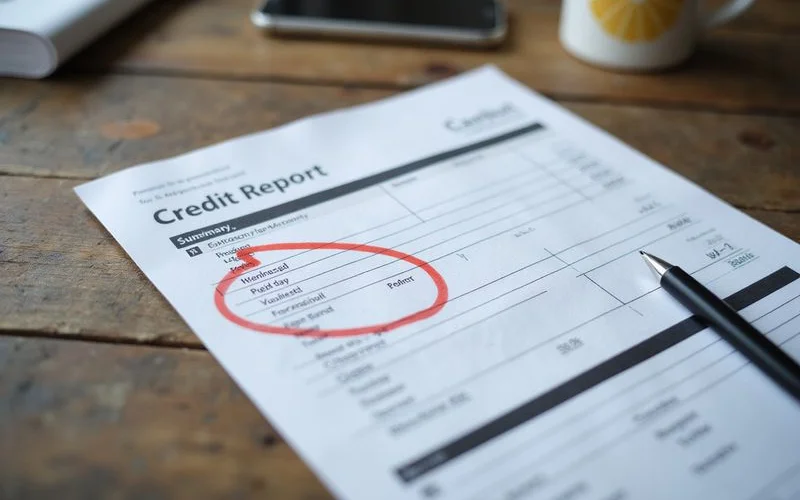
We recommend checking AnnualCreditReport.com to secure your free weekly reports for 2026 and reviewing them carefully. Follow this exact sequence before applying anywhere:
- Pull all three credit reports. Disputing a data error is the absolute cheapest score improvement available.
- Check for rental debt specifically. A lingering collection from a former landlord matters far more than the raw score itself.
- If you filed bankruptcy, find the discharge notice. Bring the physical paperwork to the leasing office.
- Calculate your income multiple. Divide your gross monthly income by the target rent. Above a 3x ratio buys a lot of forgiveness on the credit score.
- Send the target property details.
Our team will confirm its actual threshold, as plenty sit below 620, and verify which structures the building accepts.
Conclusion
Securing an apartment with less than perfect credit requires strategy, not just luck. The right documentation and a clear understanding of property criteria make all the difference.
If a thin credit file is the whole problem rather than rental debt, our guide to renting with a broken lease or a balance owed covers the structures that fix it.
We are ready to help you evaluate your options and find a management company that looks at the full picture. Reach out with your target properties today to get started.