
Evaluating an effective rent weeks free concession is a process we see property investors and business owners misunderstand every single day. The confusion usually starts when a leasing office advertises massive upfront discounts to drive traffic. Our team consistently finds that understanding how to calculate effective rent is the only way to protect your bottom line.
You know how property managers often bury the actual cost inside the lease terms.
We use this guide to break down the math behind these pricing structures and walk through the exact steps you should take. Let’s look at the current market data and explore a few practical ways to respond.
The two offers that look obvious and aren’t with an effective rent weeks free concession
The difference between a great deal and an expensive mistake often comes down to the lease term. Our analysts recently compared a two-month free offer on a 15-month lease against a one-month free offer on a 12-month lease. Both spaces carried a gross rent of $1,438, which matched the Fort Worth average as of April 2026 per RentCafe. The first option sounds significantly better because it provides twice the free rent. We ran the numbers to show exactly how this plays out.
| Offer | Months paid | Total paid | Term | Effective monthly |
|---|---|---|---|---|
| 2 months free, 15-month term | 13 | $18,694 | 15 | $1,246 |
| 1 month free, 12-month term | 11 | $15,818 | 12 | $1,318 |
The first deal easily wins by $72 a month under those exact conditions. Our advice changes completely when the gross rents differ across properties. RealPage data from April 2026 shows that U.S. apartment concessions average nearly six weeks free, but base prices fluctuate wildly. We always warn clients to watch what happens when the starting numbers shift.
| Offer | Gross | Term | Effective monthly |
|---|---|---|---|
| 2 months free | $1,900 | 15 | $1,647 |
| 1 month free | $1,750 | 12 | $1,604 |
Now the bigger concession actually loses by a noticeable margin. Our team points out this reversal as the primary reason to do the arithmetic instead of just comparing headlines. Zillow reported in June 2026 that nearly 40 percent of rentals offered some type of concession. You cannot afford to skip this math when almost half the market is actively discounting.
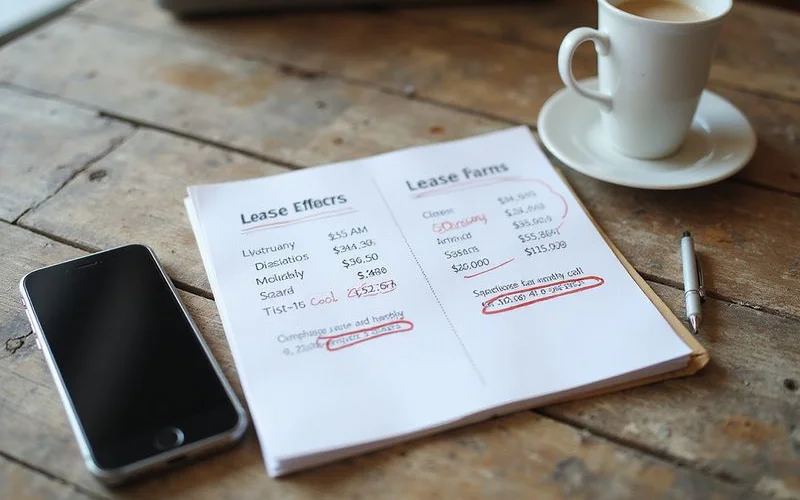
The formula
We always rely on a simple calculation to strip away the marketing noise. Effective rent equals the gross rent multiplied by the months you actually pay, divided by the total months in the term. That covers the three core inputs: the starting gross rent, the number of free months, and the total lease length. Our internal tools automatically compute this, but doing it manually keeps you sharp during negotiations.
Property management systems like AppFolio and Entrata calculate these figures automatically on the official ledger. We recommend running the numbers yourself before signing any paperwork. Weeks convert to months by dividing by 4.33, meaning eight weeks free is roughly 1.85 months, not a full two. Our clients often catch this small mathematical difference on large leases.
You must also account for mandatory monthly fees that do not get discounted. We see many renters forget to factor in pet rent, parking fees, or admin charges when calculating the true net effective rate. These hidden costs remain fixed even during your free weeks. Our standard practice is to add these fixed costs back into the final effective rent figure for a completely accurate comparison.
You should gather these specific data points before running the equation:
- The exact gross rent listed on the lease agreement
- The specific number of free weeks or months offered
- The total duration of the lease term
- Any fixed monthly fees excluded from the concession
Prorated vs up-front
Properties apply free rent in two distinct ways, and they impact your cash flow very differently. Our leasing experts usually prefer one method over the other depending on the client’s immediate capital needs.
Up-front. Your first month or two cost nothing, and then month three hits you with the full gross rent. We see this work beautifully for businesses needing move-in cash flow to buy equipment or furniture. The sudden jump often catches people off guard if they budget strictly from their first few zero-balance statements. Software systems will strictly enforce the gross rent on the exact day the concession ends.
Prorated. The discount spreads evenly across the entire term, making every single month equal to the effective figure. Our experience shows this structure is significantly easier to live with and compare against other properties. The total dollar amount stays the exact same either way. We highly recommend asking the property manager to pick the prorated option unless you specifically require cash relief up front.

The renewal catch
This remains the part nobody explains and the specific detail that costs renters the most money. Our consultants review dozens of leases where the effective rent was just a temporary discount off the gross. The official lease document only permanently records the higher gross figure. We constantly warn clients that when the renewal notice arrives, the property quotes the new price against the gross rent, not against what you were actually paying each month.
Take a look back at the first example above with the $1,438 gross and the $1,246 effective rate. Our analysis shows your renewal quote will start from $1,438 at the absolute best. That feels like a 15 percent increase from your perspective, while the leasing office views it as a zero percent increase. We know that both statements are technically true based on how the contract is written.
The Impact of Pricing Software
Our industry contacts confirm that major revenue management systems are built to maximize this exact renewal gap. Software programs like AI Revenue Management (AIRM) use local market data to push for higher gross rents upon renewal. We actively track these algorithmic platforms because they routinely suggest 2 to 5 percent increases on the base rent. You need a strategy to counter this automated pricing.
What to do about it:
- Budget for the step-up before you sign. If the gross rent sits outside your comfortable range, a concession just delays the pain. We consider this a timing decision rather than a true affordability solution.
- Ask whether renewal concessions are typical. Some communities routinely offer a new discount at renewal if they are still trying to fill vacant units. We find that premium buildings in high-demand areas almost never do.
- Use renewal support. When the notice lands, we pull comparable pricing for your own building and the immediate area so you can negotiate with a number instead of accepting one. That is part of the free Move-In Concierge.

The clawback clause
Almost every concession addendum includes a strict penalty for leaving early. Our legal review team sees this standard language in nearly all modern commercial and residential agreements. If you break the lease early, the discount you have already received becomes immediately payable on top of whatever else you owe.
The True Cost of Breaking a Lease
We see this surprise renters who sign a standard Texas Apartment Association (TAA) lease. The typical TAA document requires you to repay the full concession, plus it adds an 85 percent reletting fee. Our calculations show that breaking a lease with 8 weeks free at $1,500 a month instantly triggers a $3,000 clawback. You will owe this massive sum before a single standard termination penalty is even applied.
Which means a 15-month lease taken for a deeper concession carries substantially more risk than a 12-month lease at a shallower discount. Our advisors always point out this real trade-off before a client accepts a longer term just to get a better number. You must read the concession addendum carefully. We know it usually takes up a single page, but it contains the most expensive terms in the entire package.
What to ask before signing
Is the free rent prorated or up-front? What is the gross rent that renewal will be quoted from? Is there a clawback if I leave early? When does this offer expire? Four questions, and they change the value of the deal.
Where the deep offers are right now
The best discounts currently sit in areas with heavy new construction. Our market analysts point specifically to North Fort Worth and Alliance, where the $1.1B North City project and continued AllianceTexas deliveries keep communities in fill mode the longest. You can negotiate aggressively when buildings are desperate to hit their occupancy targets.
Market context as of Q1 2026 shows roughly 30,200 units under construction metro-wide. Our data partners at CoStar and Northmarq note that starts are falling sharply, with about 7,300 to 7,500 units delivered against 8,500 absorbed in the quarter. The current pipeline sits about 43 percent below its 2023 peak. We see abundant windows of opportunity right now, but they are steadily closing.
Other major markets show similar aggressive discounting to attract tenants. We track data out of Denver and Austin, where mid-2026 reports show nearly 68 percent and 37 percent of stabilized units offering concessions, respectively. You will find that these high-supply regions practically require properties to offer at least four to six weeks free just to remain competitive.
What to do first
We suggest starting with a clear, mathematical comparison of your options. A simple spreadsheet works best to track the exact variables across different properties before making a final choice. You must stay objective and ignore the flashy marketing banners.
- Get the gross rent, the concession, and the term for every offer you are comparing.
- Run the formula on each using the method we outlined above. Do not compare weeks.
- Ask whether it is prorated or up-front.
- Ask what the renewal will be quoted against, and budget for it.
- Check the clawback clause before taking a longer term.
If you are weighing a discounted new build against a steady older one, that comparison is here and the lease-up path covers the board of current offers. Our team is ready to help you run the final numbers. Take the time to do the math so you can feel confident that your next lease with an effective rent weeks free concession is actually the great deal it claims to be.