“Second chance” isn’t a type of apartment
It’s a search term people type when they’ve been denied and don’t know what else to call it. There’s no separate class of building called a second-chance apartment in Fort Worth. What exists is a set of structures that let a community approve a file it would otherwise decline.
Which structure you need depends entirely on what’s actually on your record — and most renters don’t know. They know they were denied. They don’t know which threshold they crossed.
So start there.
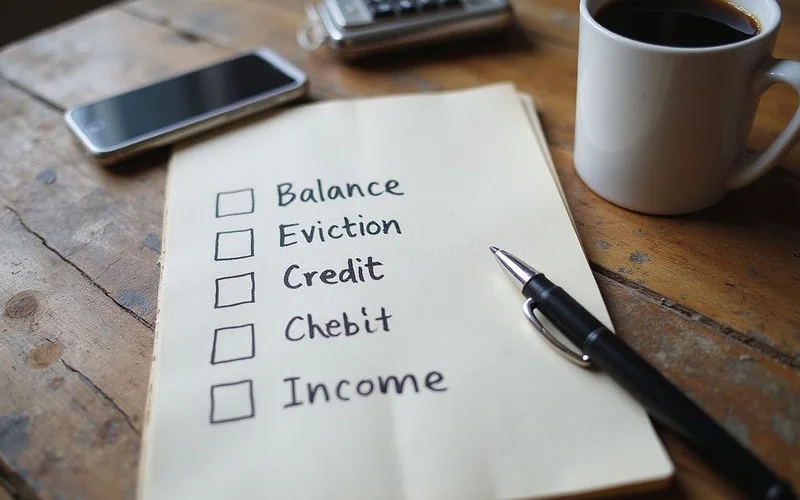
The four-question self-audit
Answer these honestly and you’ll know which page to read next.
1. Do you owe money to a past landlord, or is there a collection on your report? If yes, that’s the money-owed path. Amount matters, and whether it’s paid or open matters more than most people expect.
2. Is there an eviction filing in your history? Also the money-owed path — but find out first whether it’s a filing that was dismissed or a judgment. Those are different records and many Tarrant County management companies draw their line between them.
3. Is your credit under about 620, or do you have no credit history at all? Under 620 usually pairs with the money-owed structures. No credit history is a different problem entirely — that’s a thin file, and the guarantor path is the standard answer.
4. Is your income hard to document — self-employed, 1099, gig, commission, or split across jobs? That’s the documentation path, and it’s frequently paired with a guarantor.
Most people answer yes to two of these. That’s normal, and it’s the thing “second chance apartment” listings never tell you: paths stack. A renter with a balance owed and 1099 income needs both a deposit structure and a documentation package, and the cost is the sum of both.
What each path costs
Rough shapes on a $1,438 unit — the Fort Worth average as of April 2026 per RentCafe — with a $500 quoted deposit and a 12-month term:
| Path | Structure | Total over the lease | Comes back? |
|---|---|---|---|
| Money owed | Doubled deposit | $1,000 | Yes |
| Money owed | Deposit alternative | Roughly $2,500 | No |
| Money owed | Last month up front | $1,938 | Applied to rent |
| Thin file | Personal cosigner | $0 to you | N/A |
| Thin file | Guarantor service | Often near $1,100 | No |
| Documentation | Better paperwork | $0 | N/A |
Those are common ranges, not quotes — premiums and fees vary by product and by property, and we price your actual situation before you commit.
Look at the spread. The difference between the cheapest structure and the most expensive one on the money-owed path is roughly $1,500 over a single lease. That’s the reason to figure out which one a property will accept before you apply, rather than taking whichever one the leasing office suggests first.
Where second-chance approvals actually happen
Not in a particular part of town. This is a management-company question, and we’d rather say that plainly than imply anything about who lives where.
Newer institutional communities across North Fort Worth and Alliance lean on automated screening, which is fast and inflexible. Older, locally managed stock across east Fort Worth, Meadowbrook, Woodhaven, Poly, and Como more often has a leasing manager who will personally read a payoff letter and a letter of explanation.
There’s a useful exception: communities in lease-up. A new property still filling units has real pressure to make a file work, which frequently means more willingness to accept a guarantor or a structured deposit. That’s posture, not criteria, and it’s still not a guarantee — but it’s why the newest buildings in the county are sometimes the easiest place for a flagged file to land.
The class divergence, and why it matters to you
Class A rents have posted year-over-year growth for five straight quarters, closing Q1 2026 up 3.2%. Class B just turned positive for the first time since 2023. Class C is still falling. That gap has narrowed to the point where a renter taking the right structure into a discounting lease-up can land somewhere genuinely better than their file suggests. Class here describes building vintage and finish only — never who lives there.
What to do first, this week
- Pull your own record. You need to know whether you have a filing or a judgment, and whether a balance is open or paid. Guessing costs application fees.
- Get a payoff letter for anything you’ve settled. One page, and it changes conversations at a leasing desk.
- Write two paragraphs of explanation. Factual, no drama, dated. Leasing managers read these more often than you’d think.
- Work out your income multiple. Gross monthly income divided by target rent. If it’s under 2.5, that’s a separate problem and it needs the documentation or guarantor path.
Then pick your path page and read what it costs.
What nobody will tell you honestly
No path is guaranteed. Criteria vary, they change without notice, and screening software returns decisions the leasing office itself sometimes can’t override. Anyone advertising guaranteed approval on a second-chance apartment is telling you something that isn’t true.
What we can do is name which paths your file keeps open, price each one in real dollars, and tell you which Fort Worth properties accepted that structure as of the date we last called them. If a path fails, that’s information — we stack the second one and send replacements the same day. That’s the whole method behind free apartment locating in Fort Worth, and it’s why we never charge you for it.
Before you assume a filing blocks you, read how Tarrant County screening reports read your file — most renters are wrong about what their own record says.
Start with whichever of the four questions you answered yes to first.