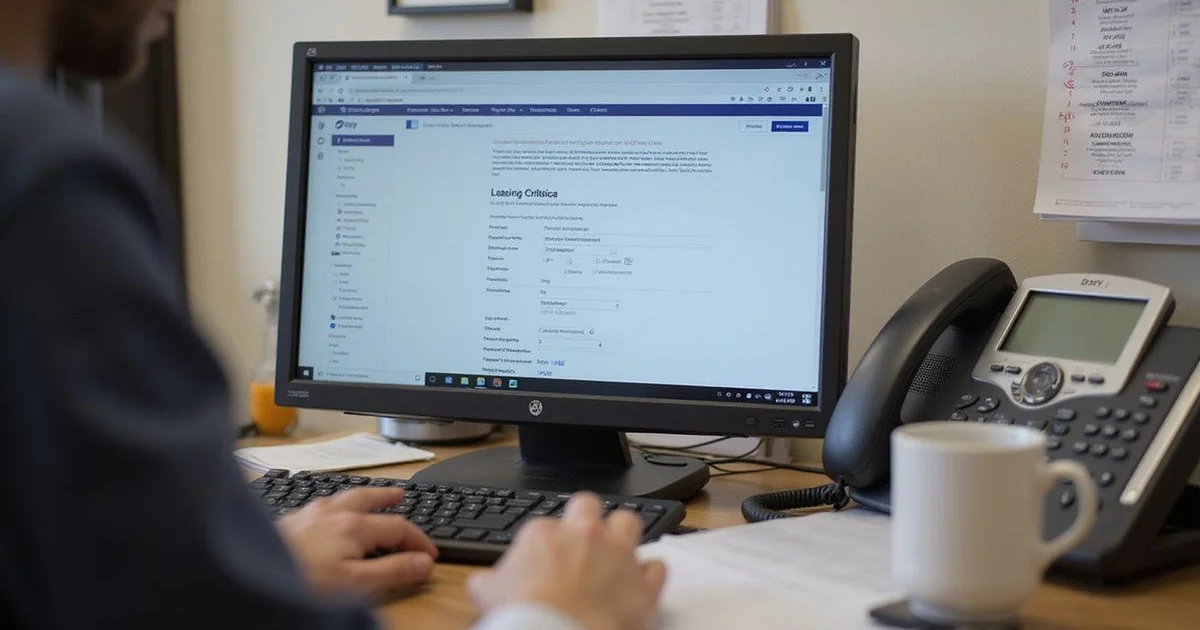
The report isn’t judging you. It’s matching thresholds.
We frequently see homeowners and business owners completely caught off guard by a rental denial. A standard apartment screening report fort worth runs your application through an automated platform, rather than a human review desk.
Software companies like RealPage, TransUnion SmartMove, or CoreLogic SafeRent pull your specific records. Our team knows they score this data against strict criteria configured by the property manager in advance. This rigid process returns an immediate decision of approve, conditional approve, or decline.
The property sets the rules, and the software executes them blindly. We remind clients that nobody at the leasing desk reads a personal background story unless a manual review is explicitly requested. This exact scenario plays out thousands of times every month across Tarrant County.

What the report actually pulls
These reports compile court records, credit scores, outstanding balances, automated income verifications, and criminal history.
We know exactly what these local databases look for during a background check.
Court Records and Evictions
Court records make up the largest piece of the puzzle, specifically eviction filings from Tarrant County Justice of the Peace courts across Precincts 1 through 8. As of 2026, many screening platforms still struggle to differentiate between a simple filing and a finalized eviction without proper configuration. Our analysts see renters frequently declined for a dismissed filing simply because the software misclassified it as an active judgment.
- A filing simply indicates a case was opened.
- A dismissal shows the case closed without a ruling against the tenant.
- A judgment confirms the court ruled in favor of the landlord.
- A writ of possession means law enforcement enforced the removal.
Many Fort Worth management companies place their absolute approval cutoff between a judgment and a dismissal.
Credit Scores and Collections
Credit data relies heavily on specific scoring models like FICO Score 9 or VantageScore 4.0. We frequently see Class A and B Tarrant County properties using a strict 620 credit score cutoff for standard approvals. These models penalize missed rental payments more harshly than older scoring versions.
Balances and collections include specific rental debt, utility collections, and general unpaid accounts. Our experience shows a reletting fee charged under Texas Property Code §92.019 is a contractual charge rather than a court judgment. Property managers often weigh this fee differently if the applicant provides the right context.
Automated Income and Criminal Background
Income verification utilizes automated tools to scan bank data. We constantly watch clean business files trigger false warnings during this step.
Criminal history review processes vary wildly by individual property policy. Federal HUD guidelines restrict blanket exclusions, so properties must apply localized rules based on specific offense categories.
Why good income gets flagged
High income often gets flagged because automated verification systems are built to read standard W-2 pay stubs and fail to parse variable business earnings.
Our specialists find that automated verification tools like Snappt or Plaid are built for extreme predictability. They look for the exact same employer, depositing the same amount, on the same day every single month. These specific systems process standard W-2 pay stubs perfectly.
We see them perform terribly when reading non-standard deposits. A business owner earning well above the required income multiple might receive an unverified status instead of an insufficient one when processing:
- Invoice deposits from clients
- Quarterly commission draws
- Variable self-employment income
These two completely different findings produce the exact same denial letter.
Our preferred fix is providing a better-formatted documentation package or adding a guarantor to the lease structure. This issue represents a software parsing failure rather than a true financial problem.

Which path overrides which flag
Different software flags require specific overrides, such as using a guarantor for credit issues or requesting a manual review for income verification failures.
We help clients bypass these automated rejections by matching the correct solution to the exact software flag. Knowing precisely what the report flagged dictates your next strategic move. Fixing the underlying data input is the only guaranteed way to change the final outcome.
| What the report flagged | What actually fixes it |
|---|---|
| Eviction judgment or open balance | Structured deposit, doubled deposit, or a deposit alternative |
| Credit band below the cutoff | Guarantor, or a deposit structure, commonly both |
| No credit history at all | Guarantor, a thin file isn’t a bad file |
| Income unverified | Documentation package, manual review, or a guarantor |
| Income genuinely below the multiple | Co-applicant, guarantor, or a lower rent band |
| Dismissed filing being read as an eviction | Often nothing, get the dismissal in writing and go to a property whose line is at judgment |
That last row is the one worth re-reading closely.
Your rights when you’re declined
The Fair Credit Reporting Act guarantees your right to receive an adverse action notice and a free copy of the exact report used to deny your application.
We always advise applicants to request their specific notice immediately after a leasing denial. Under federal law, a property must issue an adverse action notice naming the exact consumer reporting agency they utilized. This specific document is your primary tool for fighting an unfair rejection.
Our guidance is to use the strict 60-day window in 2026 to request your file from that agency at no charge. You can review exactly what the property manager saw on their screen and identify common errors:
- A satisfied balance showing as open
- A dismissal displaying as an active judgment
- Eviction filings that do not belong to you
We know federal regulations give the reporting agency 30 days to investigate and correct the error.
Do this before you apply anywhere else
Every application after a denial costs another non-refundable fee. This cycle just gets you the exact same result until the underlying input changes. Pull the report, find the flag, and pick the structure that overrides it. That specific sequence saves money.
The step nobody uses
Requesting a manual review is a highly effective, rarely used step that forces a human to look past the automated denial.
We highly recommend asking the leasing manager for a direct manual review of your file. An automated decline simply means your data crossed a predefined software threshold. Leasing managers can frequently override these rigid systems if someone formally requests a closer look.
Our methods prove that organized financial documentation turns a difficult situation into a simple approval. Supplying the right paperwork transforms a tedious twenty-minute review into a quick two-minute verification:
- Clean, recent bank statements
- A formal payoff letter for any disputed debts
- A short, two-paragraph summary explaining your situation
This approach successfully changes outcomes at locally managed communities across Fort Worth today.
We tell clients that asking for a review is a standard professional request rather than a special favor. The property manager is already involved in the process, so a clear explanation makes their job much easier.
If your report came back clean and the flag was income rather than history, the documents that beat an automated income flag is the next thing to read.
It is one of the specific steps we take when determining why was my apartment application denied, helping local clients avoid unnecessary application fees. Secure your documentation early, ask for the human review, and confidently sign your new lease. That review is part of what a free apartment locator in Fort Worth does for you at no cost.