The problem is format, not amount
This is the core of the documentation path, and the problem is almost never what renters assume.
Automated income verification is built to read W-2 pay stubs. Same employer, same amount, same date each month.
Invoice deposits, platform payouts, commission draws, and owner distributions don’t match that pattern. So the system returns unverified rather than insufficient — and the property’s criteria treat those identically even though they mean completely different things.
Which means the fix isn’t earning more. It’s presenting what you earn in a form that can actually be read.

What to send, by how you’re paid
Self-employed with a business. Two to three months of business and personal bank statements, most recent tax return including Schedule C, and a signed CPA letter if you have an accountant. Current client contracts help if you have long-term ones.
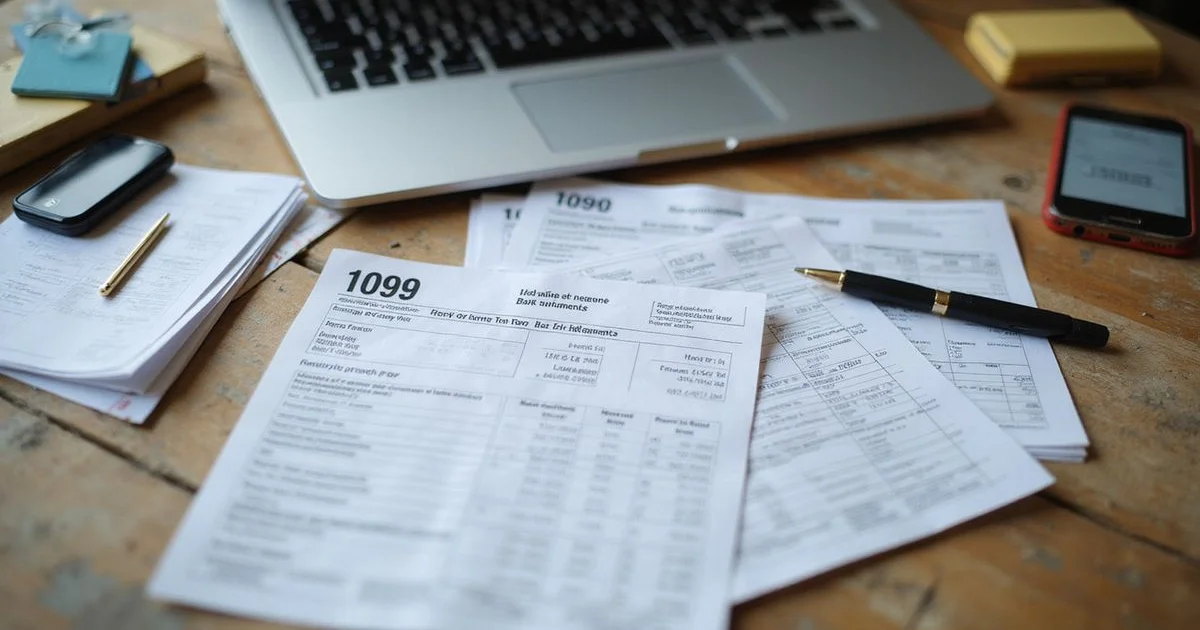
1099 contractor. Most recent 1099s from each payer, two to three months of bank statements showing the deposits, and your most recent return.
Gig or platform work. The platform’s earnings summary — Uber, DoorDash, Instacart and similar all produce one — plus bank statements showing the deposits landing. Send six months rather than three, because averaging over a longer window makes fluctuating income look like what it is: consistent in aggregate.
Commission or variable W-2. Three months of stubs plus a year-to-date summary, so the average is visible rather than whichever month happened to be last.
Multiple income sources. All of them, organised by source, with a summary that adds them up. Don’t make someone else do the arithmetic.
Format matters more than people expect
PDFs from the bank, not screenshots. A downloaded statement PDF parses in automated systems and reads as legitimate to a human. A phone screenshot frequently gets flagged or rejected outright.
Consistent file names. bank-statement-2026-05.pdf rather than IMG_4471.jpg. It sounds trivial. It signals organisation to whoever opens the folder.
A one-page cover summary. This is the highest-leverage thing on this page:
Cover summary — what to put on it
Average gross monthly income across the period. Each source, listed with its amount. The months covered. Your target rent and the resulting multiple. Six lines, one page, at the front of the folder.
That page turns a twenty-minute review into a two-minute one. Leasing managers are not hostile to self-employed renters; they’re busy, and a file that’s hard to read gets deferred rather than approved.

The number you’re aiming at
Most Tarrant County properties want gross monthly income of 2.5x to 3x the rent. At the Fort Worth average of $1,438 (RentCafe, April 2026):
| Multiple | Gross monthly needed |
|---|---|
| 2.5x | $3,595 |
| 3x | $4,314 |
| 3.5x (some Class A) | $5,033 |
Gross, before tax and before business expenses. If you’re self-employed, this is worth checking carefully — some properties calculate against your net business income from the return rather than gross deposits, which can be a very different number. Ask which they use.
More on how the multiple works and the legitimate ways to meet it is here.
When documentation alone isn’t enough
If your income genuinely clears the multiple and the file is still flagged, the next move is a manual review — ask the leasing office for a human to look at the complete package. That’s a normal request, not a favour, and locally managed communities across east Fort Worth, Meadowbrook, Woodhaven, Poly, and Como grant it regularly.
If it’s still flagged after that, or if the property runs pure automation, a guarantor resolves it directly by putting a conventionally verifiable party behind the lease. Self-employed files that bring both a guarantor and good documentation clear almost everything.
And if the income genuinely sits below the multiple, documentation won’t invent it. We’d rather tell you that than run you through four application fees to find out.
What to do first
- Download three months of bank statements as PDFs. Six if your income fluctuates.
- Find your most recent tax return and 1099s.
- Calculate your average gross monthly income across those months. Write it down.
- Write the one-page cover summary.
- Send us the property — we’ll confirm its actual multiple, whether it calculates on gross or net, and what documentation it accepts.