
The decision in one line
Both routes sit on the guarantor path, and the choice comes down to this: if you have someone who qualifies and you’re comfortable asking, a personal cosigner is cheaper. If you don’t, or you’d rather not, a service costs money and asks nothing of anyone.
Everything below is the detail behind that.
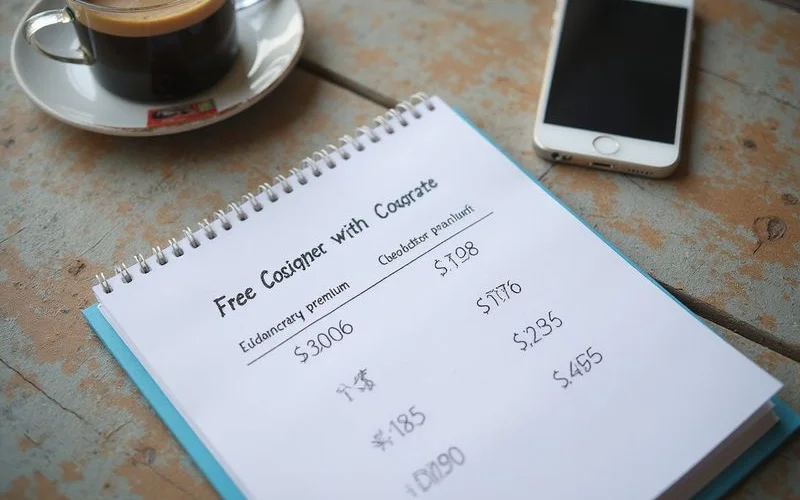
Side by side
At the Fort Worth average of $1,438 a month (RentCafe, April 2026), 12-month term:
| Personal cosigner | Guarantor service | |
|---|---|---|
| Cost to you | $0 | Often near $1,100 for a standard file |
| Cost over 15 months | $0 | Often near $1,375 |
| Refundable | N/A | No |
| Who carries liability | A named person, on the lease | A bond — no individual |
| Qualification | 4x–5x rent income, credit check | Their underwriting, based on your file |
| Approval speed | Depends on their paperwork | Frequently same day |
| Property acceptance | Broad, but not universal | Varies by product and management company |
| Relationship cost | Real | None |
The premium on a service is priced against your file, so a weaker application costs more. Quotes for higher-risk files can run meaningfully above the figure above, which is worth getting before you assume.
What a personal cosigner is really giving you
Not a favour. A twelve-month contingent liability for roughly $17,000 of rent, plus damage and reletting exposure.
That’s the honest framing, and we’d rather you take it into the conversation than discover it afterwards. A guaranty addendum typically makes them liable for the full lease obligation, and typically lets the property pursue them directly rather than only after exhausting remedies against you.
Which means the question isn’t “will you help me.” It’s “will you accept a five-figure contingent obligation for a year.” Ask it that way and the people who say yes are the ones who understood it.
When a service is the better call
You have nobody who qualifies. Extremely common, particularly for renters relocating alone, first-generation renters, or anyone whose family is in a different financial position than a 4x-rent multiple requires.
You don’t want the relationship in it. A completely legitimate reason. Money between family members and a lease going sideways is a bad combination, and paying $1,100 to avoid it is a defensible use of $1,100.
You need speed. Service approvals are frequently same day. A personal cosigner has to gather documents, authorise a credit check, and sign — which on a competitive unit can take longer than the unit stays available.
You have no SSN. International students and recent arrivals often can’t be credit-screened conventionally, and the service route is sometimes the only one open.
When a personal cosigner wins
Someone genuinely qualifies and is genuinely willing. It’s free, and free is a strong argument.
The property doesn’t accept third-party products. Some locally managed Tarrant County communities don’t work with Leap or TheGuarantors and want a person they can call. In that case there’s no choice to make.
Your file is weak enough that a service quotes high. If the premium comes back at well above the standard rate, the cost comparison shifts.

The acceptance question that decides it
Neither option matters if the property won’t take it.
Acceptance runs by management company. Some operators integrate one specific service into their leasing platform and accept only that one. Some accept several. Some accept none and want a personal cosigner. Some cap guarantor use to files without a rental-history flag, which matters if you’re also on the money-owed path.
That’s the call we make before you enroll in anything or ask anyone. Paying a premium for a product the property won’t accept is a completely avoidable expense, and it happens.
Compare against the third option
A doubled deposit — $1,000 on a $500 quoted deposit — is refundable, which makes its true cost close to zero. If you can cover it and the property accepts it, it beats a guarantor service on cost by roughly $1,100 over a lease. Check whether that’s available before defaulting to a guarantor at all.
What to do first
- Ask the property which guarantor products it accepts, and whether it accepts a personal cosigner.
- Get the guarantor income multiple — usually 4x–5x — before approaching anyone.
- If you’re going the service route, get the quote for your actual file, not the advertised rate.
- Compare against a doubled deposit you could plausibly cover.
Before you ask a person, read exactly what they’d be signing. It’s a short page and it makes the conversation a fair one.